Risks and regret
What risks and regrets are reported after liposuction?

Most reported problems after liposuction are local, such as contour irregularity and seroma. A 60-study meta-analysis (21,776 patients) found 12% overall. Life-threatening complications are rare and more frequent with combined operations.[1][2]
Written by the Body Lipo Seoul editorial team from the sources listed on each page. Last updated: .
Which downsides of liposuction are reported most often?
That meta-analysis, published in 2024, pooled studies of people who had cosmetic liposuction on its own; most of the studies were observational.[1]
Contour irregularity and seroma (a fluid collection) were each reported in 2%, and haematoma, surgical site infection, fibrosis or firmness and pigment changes in 1% each.[1]
In a prospective study of 1,248 patients at eight centres, followed for a mean of 52.4 months, complications reached 14.8% and major ones 1.9%. Contour irregularity was the most frequent, at 5.8%.[3]
Why can irregularity, asymmetry or loose skin remain?
A review of liposuction principles advises suctioning mainly the middle or deeper fat. It calls preserving the superficial fat layer crucial to preventing skin and contour irregularities.[4]
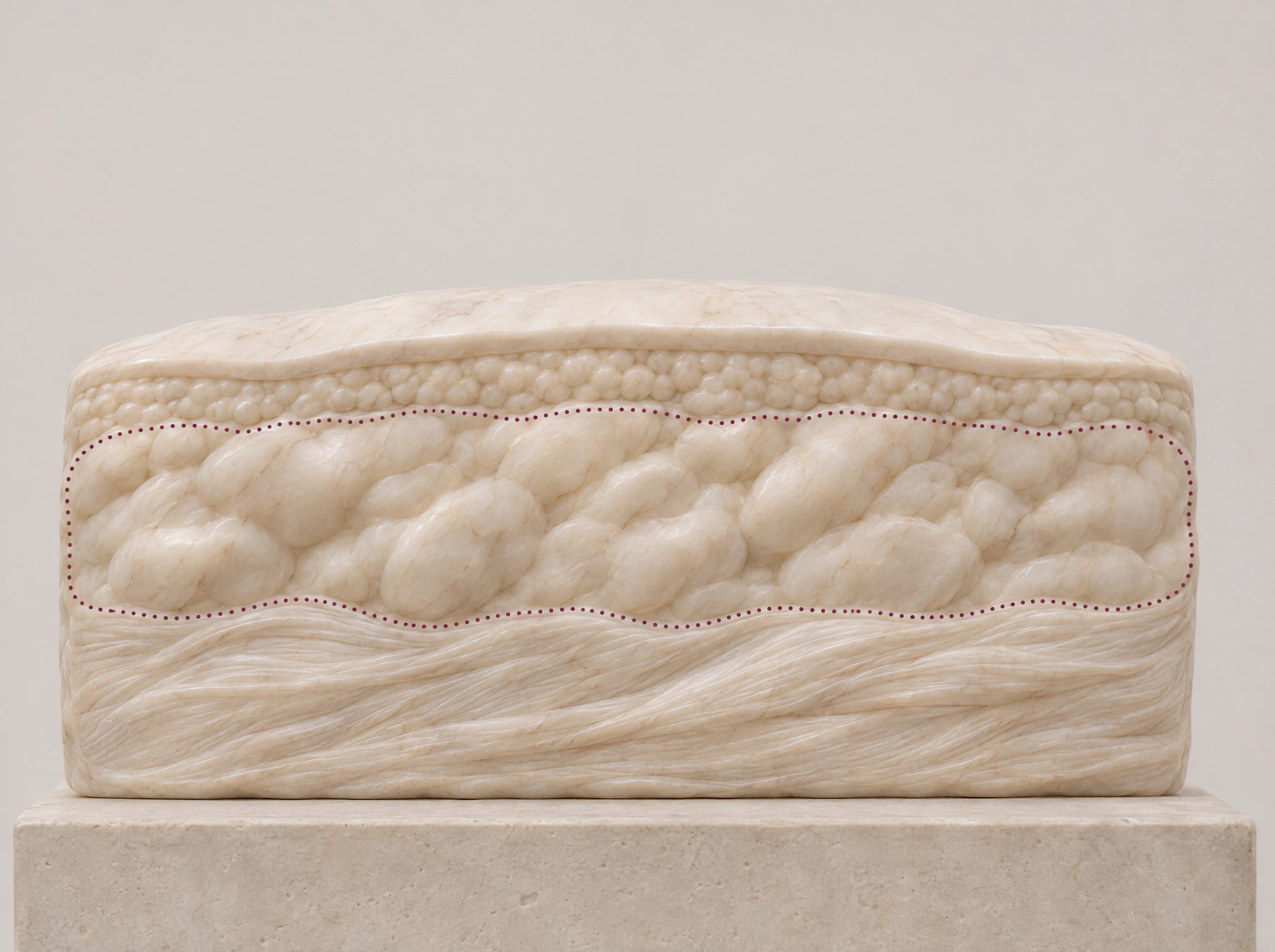
On the thighs, the same review names zones where the tissue under the skin is attached to the muscle fascia; to avoid deformity, these are not suctioned directly.[4]
Before surgery, skin quality, existing asymmetry and dimpling are examined, and irregularities already present are marked on the skin.[4]
Liposuction removes fat, not skin, and NHS information says it works best where the skin is firm and elastic. NHS liposuction information, checked 14 November 2026 Where skin already hangs, the guides to the upper arms and the abdomen explain when skin removal is considered.
How often are deaths and serious complications reported?
Among 246,119 procedures involving liposuction at accredited US outpatient facilities in 2019–2021, the mortality rate was 0.009% (21 deaths), and venous thromboembolism (deep vein thrombosis or pulmonary embolism) 0.03%.[6]
| Data and period | Procedures | Reported deaths |
|---|---|---|
| Census survey of aesthetic plastic surgeons, 1994 to mid-1998 | 496,245 | 95 (1 in 5,224; 19.1 per 100,000) |
| Survey of the same society's members, September 1998 to August 2000 | 94,159 | Liposuction alone: 1 in 47,415; combined with abdominoplasty: 1 in 3,281 |
| Accredited outpatient facilities, 2019–2021 | 246,119 involving liposuction | 0.009% (21 deaths) |
In the 1994–1998 census of North American board-certified aesthetic plastic surgeons, pulmonary thromboembolism was the leading cause of death (23.4%).[5] In the 2000 survey, deaths were 14 times as frequent with abdominoplasty added.[7]
A German inquiry that collected cases of severe complications from 1998–2002 found 72, 23 of them fatal. Bacterial infections were the most frequent; bleeding, perforated abdominal organs and pulmonary embolism also caused deaths.[8]
In that inquiry, 57 of the 72 severe complications were evident within 24 hours, and in the North American census many deaths occurred during the first night after discharge. Fat embolism and lidocaine toxicity are also listed.[8][5][9]
Which factors raise the risk of serious complications?
In 31,010 liposuction procedures in the CosmetAssure insurance database (2008–2013), liposuction alone had a major complication rate of 0.7%. Combining other operations was linked to more major complications (relative risk 4.81).[2]
Among 129,007 cosmetic surgery patients, confirmed venous thromboembolism followed 0.20% of combined procedures and 0.04% of single ones. Body procedures, a higher body mass index and age raised the risk.[10]
In a registry of 4,534 patients, over 100 mL of aspirate per unit of body mass index was linked to more complications (odds ratio 4.58). Large-volume studies (3,583 patients) reported 3.35% major complications and no fat embolism or death.[11][12]
Longer operating time was linked to more complications after plastic surgery, so how many areas to treat in one visit is part of the risk plan. A long journey adds immobility; plan the flight home with the surgeon.[13]
Which changes settle, and when is revision discussed?
NHS information says bruising and swelling may last up to 6 months, and numbness should go away in 6 to 8 weeks; persistent numbness lasting months is listed among the things that can go wrong. NHS liposuction side effects, checked 14 November 2026
For irregularities that appear after surgery, the review of liposuction principles advises waiting at least six months without further surgery before correction. Garments and daily care are covered in recovery and compression.[4]
Depending on severity, correction can involve suction of a prominence or of the area around a depression, fat grafting into areas that were overtreated, or skin excision.[4]
In the eight-centre study of 1,248 patients, 8.7% had revision surgery; high body mass index, smoking, aspirate over 5 litres and combined procedures predicted complications.[3]
Is liposuction a way to lose weight?
NHS information describes liposuction as removing small areas of fat that are hard to lose through exercise and diet, to change body shape. It adds that results are generally long-lasting if you keep a healthy weight. NHS liposuction overview, checked 14 November 2026
A systematic review of 10 prospective studies (231 women) found lower weight after abdominal lipectomy in four of five studies at 1–2 months, but in none of five studies at 3–20 months.[14]
The review of liposuction principles lists obesity or generalised adiposity among reasons a person may not be a suitable candidate, and notes that later weight gain affects appearance and satisfaction.[4]
What should you ask before deciding?
With an outline of liposuction risks and side effects at hand, ask the surgeon which apply to your plan and how each would be handled.
Which areas, and how much, will be suctioned?
Why it matters. Large volumes relative to body mass index and suction close to the skin are linked to complications and irregularity.
What a good answer includes. The surgeon draws the map, states the planned aspirate and explains how the layer under the skin is kept.
Treat with caution. The plan is to remove as much fat as possible.
Will anything be combined with liposuction, and how long will it take?
Why it matters. Combined operations and longer operating time were linked to more complications.
What a good answer includes. You hear the expected duration, the order of priority and when staging would be advised.
Treat with caution. Further operations are added to the same day without discussing the risk.
How will blood-clot risk be assessed and reduced?
Why it matters. Pulmonary thromboembolism was the leading cause of death in the North American census survey.
What a good answer includes. The surgeon asks about previous clots, medicines and body mass index and explains prevention, walking and the flight home.
Treat with caution. No one asks about clots or medicines.
If firmness or irregularity remains, who examines it, and when is revision discussed?
Why it matters. Irregularities are watched for months before correction is decided.
What a good answer includes. You receive review dates, a contact for after you return home and the steps if revision is considered.
Treat with caution. No follow-up is arranged after departure.
Common questions about liposuction risks
Can you die from liposuction?
Deaths are rare but reported: 0.009% at accredited US outpatient facilities in 2019–2021, and 1 per 5,224 procedures in a 1994–1998 North American census survey.[5][7][6]
What are the downsides of liposuction?
In a meta-analysis of 60 studies, contour irregularity and seroma were each reported in 2%, and haematoma, infection, firmness and pigment changes in 1% each. All complications came to 12%.[1]
What is reported about regret after liposuction?
In a prospective study of 1,248 patients followed for a mean of 52.4 months, 8.7% had revision surgery, and contour irregularity was the most frequent complication (5.8%).[3]
If a liposuction result looks wrong, can it be corrected?
Revision is reported. After at least six months without further surgery, correction can involve suction of a prominence or around a depression, fat grafting, or skin excision, depending on severity.[4]
References
(14)
Bibliographic records retrieved from PubMed (U.S. National Library of Medicine).
Aljerian A, Abi-Rafeh J, Hemmerling T, et al. Complications of Aesthetic Liposuction Performed in Isolation: A Systematic Literature Review and Meta-Analysis. Plast Surg (Oakv). 2024;32(1):19-32.
Kaoutzanis C, Gupta V, Winocour J, et al. Cosmetic Liposuction: Preoperative Risk Factors, Major Complication Rates, and Safety of Combined Procedures. Aesthet Surg J. 2017;37(6):680-694.
Gentile P, Sterodimas A. Long-Term Outcomes and Complication Profile After Modern Liposuction: A Multicenter Prospective Cohort Study with Five-Year Follow-up. Aesthet Surg J. 2026;sjag193.
Tabbal GN, Ahmad J, Lista F, et al. Advances in liposuction: five key principles with emphasis on patient safety and outcomes. Plast Reconstr Surg Glob Open. 2013;1(8):e75.
Grazer FM, de Jong RH. Fatal outcomes from liposuction: census survey of cosmetic surgeons. Plast Reconstr Surg. 2000;105(1):436-46; discussion 447-8.
Valentine L, Alvarez AH, Weidman AA, et al. Liposuction Complications in the Outpatient Setting: A National Analysis of 246,119 Cases in Accredited Ambulatory Surgery Facilities. Aesthet Surg J Open Forum. 2024;6:ojad107.
Hughes CE 3rd. Reduction of lipoplasty risks and mortality: an ASAPS survey. Aesthet Surg J. 2001;21(2):120-7.
Lehnhardt M, Homann HH, Daigeler A, et al. Major and lethal complications of liposuction: a review of 72 cases in Germany between 1998 and 2002. Plast Reconstr Surg. 2008;121(6):396e-403e.
Haeck PC, Swanson JA, Gutowski KA, et al. Evidence-based patient safety advisory: liposuction. Plast Reconstr Surg. 2009;124(4 Suppl):28S-44S.
Winocour J, Gupta V, Kaoutzanis C, et al. Venous Thromboembolism in the Cosmetic Patient: Analysis of 129,007 Patients. Aesthet Surg J. 2017;37(3):337-349.
Chow I, Alghoul MS, Khavanin N, et al. Is There a Safe Lipoaspirate Volume? A Risk Assessment Model of Liposuction Volume as a Function of Body Mass Index. Plast Reconstr Surg. 2015;136(3):474-483.
Kanapathy M, Pacifico M, Yassin AM, et al. Safety of Large-Volume Liposuction in Aesthetic Surgery: A Systematic Review and Meta-Analysis. Aesthet Surg J. 2021;41(9):1040-1053.
Hardy KL, Davis KE, Constantine RS, et al. The impact of operative time on complications after plastic surgery: a multivariate regression analysis of 1753 cases. Aesthet Surg J. 2014;34(4):614-22.
Seretis K, Goulis DG, Koliakos G, et al. Short- and Long-Term Effects of Abdominal Lipectomy on Weight and Fat Mass in Females: a Systematic Review. Obes Surg. 2015;25(10):1950-8.